
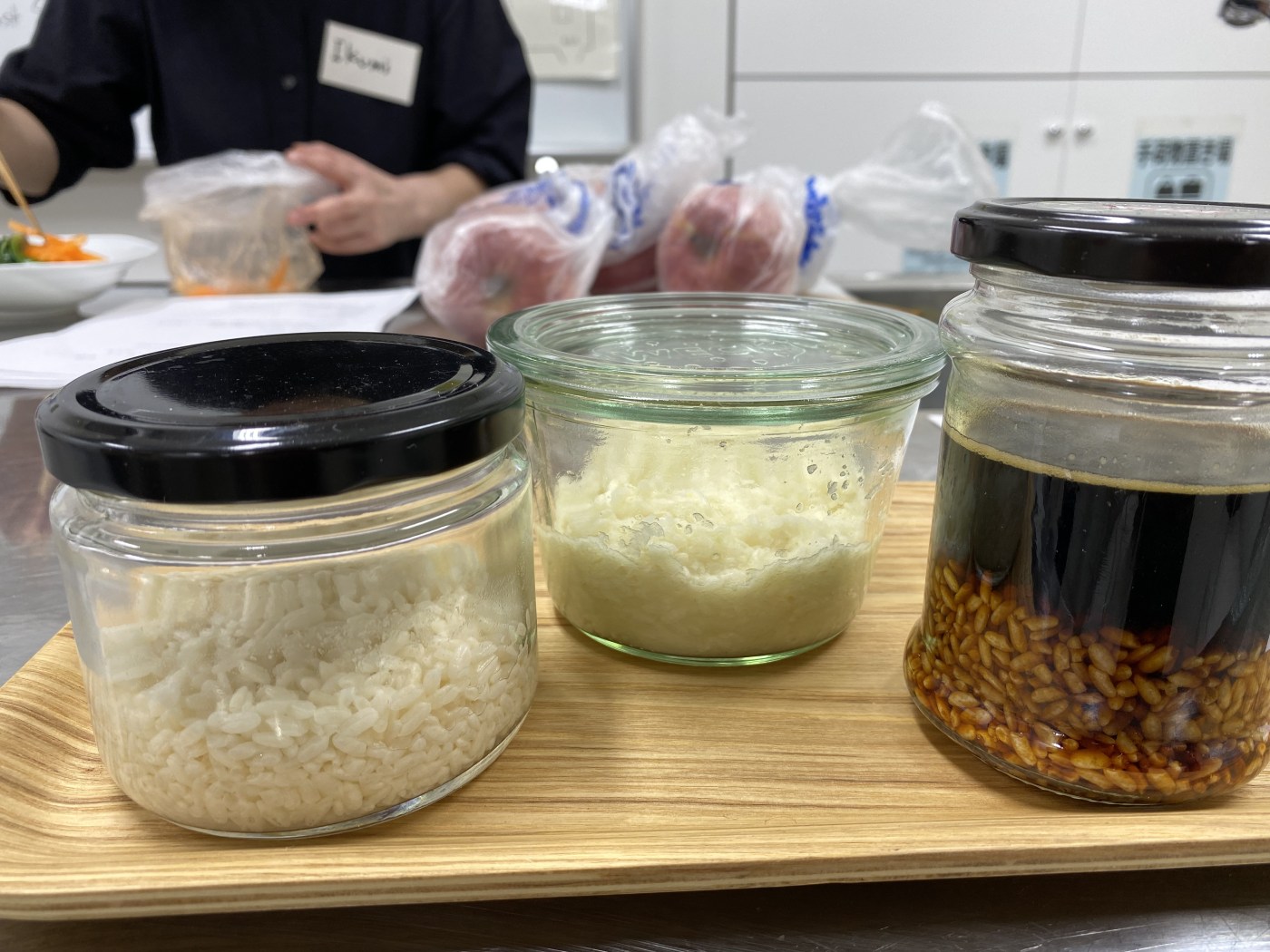
Condiment 1: Shio Koji
Ingredients
Dry rice koji: 50 g
Salt: 15 g (Use unrefined salt, such as sea salt, which contains naturally incorporated minerals. These minerals help to make shio koji more flavorful.)
Water: 50 ml
How to Make
- Add the koji, salt, and water to a resealable plastic bag. Mix the contents by gently massaging the bag starting at the top of the contents. Start the fermentation process by either of the methods below.
- Use a Yogurt Maker
- Set the yogurt maker to maintain a temperature of 60℃ (140℉) for 6 hours.
- After 2-3 hours, the shio koji solution will have loosened a bit. At this point, lightly massage the bag from the top of the contents down. After 6 hours, the koji will be done. Store it at room temperature, but avoid places that become hot.
- Simply Let the Shio Koji Solution Ferment at Room Temperature
- Set the bag containing the koji solution aside in a place that does not get direct sunlight.
- After 1-2 days, lightly massage the bag from the top of the contents down.
- When the shio koji has thickened to a thin pasty texture (rice grains will still be visible), do a taste test. If you notice not only saltiness, but also a bit of sweetness and umami, the shio koji is ready to use. Store it at room temperature. Fermentation will continue for another 5-7 days in warm temperatures and anywhere up to 2 weeks with lower temperatures. If you need to store your koji for longer periods, place it in a refrigerator.
How to Use Shio Koji
To marinate meat, fish, tofu, and vegetables, the amount of shio koji you use should be 10% of the weight of what you are marinating. As a rough measure, 1 1/2 teaspoons of shio koji will weigh about 10 grams. You can also add shio koji when cooking rice. For this purpose, use 1 to 1 1/2 teaspoons of shio koji per 150 grams of uncooked rice. In Japan, uncooked rice is traditionally measured in units of “go” (合), with one “go” is equal to 150 grams.
Condiment 2: Onion Shio Koji
Ingredients
Dry rice koji: 50 g
Salt: 15 g
Onion: 50 g (about 1/4 of a medium-size onion)
How to Make
- Grate or mince the onion, then add it, together with the koji and salt, to a resealable plastic bag. Mix the contents by gently massaging the bag starting at the top of the contents. Start the fermentation process by either of the methods described above.
Condiment 3: Shoyu Koji
Ingredients
Dry rice koji: 50 g
Shoyu: 150 g
How to Make
- Add the koji and shoyu to a resealable plastic bag. Start the fermentation process by either of the methods described above.
How to Use Shoyu Koji
Make a dip by combining shoyu koji and mayonnaise to taste. Make a dressing by mixing shoyu koji with your choice of oil and lemon juice.
Tip: Koji condiments keep well, but their flavor and aroma are best enjoyed by preparing small amounts that you can quickly use up.
About Koji
Action of Koji Enzymes
The enzymes in koji are active up to temperatures of 70℃ (158℉). Koji also contains bacteria that are beneficial for the gut microbiome and create conditions that are advantageous for other beneficial bacteria therein. Bacteria in koji benefit the gut by promoting the production of neurotransmitters that boost the immune system, reduce stress, and boost motivation.
Neurotransmitters in the Gut
– Serotonin, shortages of which in the brain can result in depression.
– Dopamine, a hormone critical for motivation and a sense of happiness.
– GABA, an amino acid that helps to lower stress.
– Butyric acid and other short-chain fatty acids, which work on the immune system to suppress inflammation.
Fresh Koji vs. Dry Koji
Fresh Koji: Fresh koji is very bioactive, but also vulnerable to alien bacteria. Also, because it contains active bacteria driving autofermentation, fresh koji has a relatively short shelf life. It will keep for about 3 weeks in a refrigerator and up to 6 months in a freezer.
Dry Koji: In contrast with fresh koji, the dry variety is not much affected by alien bacteria, and autofermentation is not a concern. Long shelf life, therefore, is its advantage. Dry koji can be stored at room temperature, but it should be kept in a cool, dry location to preserve its flavor and quality. Ideally, it should be refrigerated in a storage bag.
How to Make the Most of Koji Condiments
Koji condiments support the immune system by promoting digestion and the elimination of metabolic waste products. These benefits, however, continue only so long as koji is present in your body, so it is best to consume koji condiments regularly.
Recipe developed by Ikumi Ohtomo

 KitchenNippon
Leave a comment